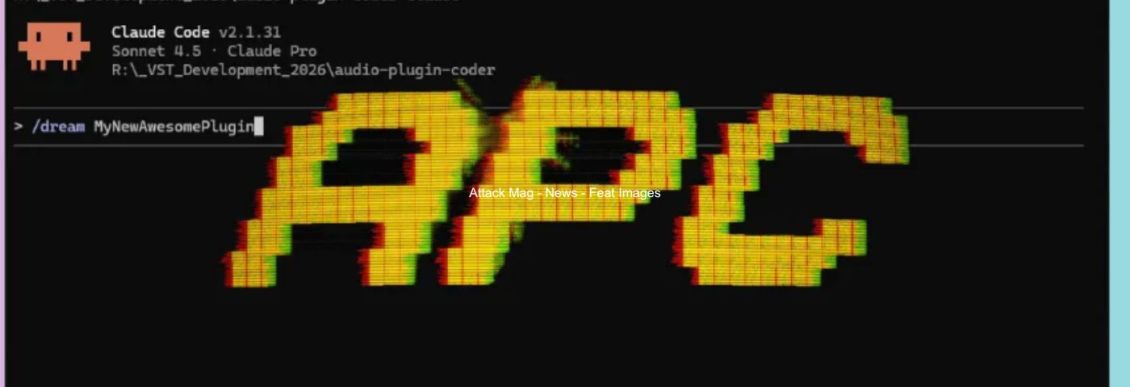
A new open-source plugin coder simplifies development and lets music producers build custom plugins using natural language rather than code.
A new open-source project called Audio Plugin Coder (APC) has been released to simplify the creation of VST3 audio plugins. Developed by Max Pfetscher (also known as Noizefield), APC uses artificial intelligence to interpret natural-language descriptions and convert them into fully functional plugin code, eliminating the need for C++ programming expertise.
Designed for producers, sound designers, and musicians, APC is built on the JUCE 8 framework and targets users who want to design custom audio tools tailored to their creative workflows. According to its creator, the tool is intended to remove a key technical barrier that has traditionally limited plugin development to experienced coders.
Prompt a plugin
Instead of writing code manually, users can describe their ideas using plain English commands. For example, entering “/dream a tape saturation effect with drive and tone controls” will prompt the system to generate a corresponding VST3 plugin. This approach opens up plugin creation to a broader community of artists and sound designers who may not have programming backgrounds.
By translating creative input into code, the tool allows users to focus on the sonic and functional aspects of plugin design. This shift reflects a growing trend in the music technology field, where AI is increasingly used to enhance accessibility and streamline development workflows.
Built on JUCE, Free and Open Source
Audio Plugin Coder is based on JUCE 8, a widely used C++ framework for audio application development. The project is completely free to use and open source, with the code available on GitHub. This openness encourages community involvement and allows users to explore, modify, and contribute to the project’s ongoing development.
The tool currently supports creating both effects and instrument plugins and is designed specifically for non-programmers. However, it remains in early development, with the developer actively seeking user feedback to guide future improvements.
A demonstration of the tool is available on YouTube, and full documentation is provided on the GitHub page. Interested users can learn more and download the project from the Noizefield website.
[social-links heading=”Follow Attack Magazine” facebook=”https://www.facebook.com/attackmag” twitter=”https://twitter.com/attackmag1″ instagram=”https://www.instagram.com/attackmag/” youtube=”https://www.youtube.com/user/attackmag” soundcloud=”https://soundcloud.com/attackmag” tiktok=”https://www.tiktok.com/@attackmagazine”] [product-collection]