
How Delivery Apps like efood, wolt, doordash Charge You More (For Worse Food)


Seattles Premier Silent Disco Headset Rental Company

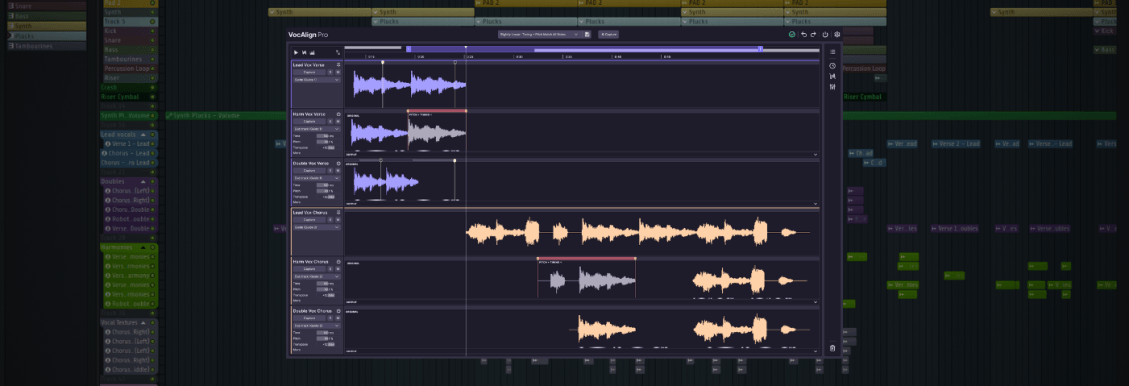

VocAlign 7 is the latest version of the popular and long-running vocal alignment software. It’s as good as you expect, but does version seven bring enough new features to the table to make it worth the upgrade?
Since 1995, Synchro Arts have been making vocal alignment a little easier with VocAlign. The industry standard software is now up to version seven with what Synchro Arts is calling the biggest workflow shift since the original debuted more than 30 years ago. The big new feature? Everything is now contained inside a single screen, with guide tracks, dubs and outputs all clearly visible at once. It’s a big change since we last checked in at version five, but is it enough to warrant the upgrade price?
What’s New in VocAlign 7 
If you’re unfamiliar, VocAlign is a vocal alignment plugin that snaps multiple tracks of audio to a guide. This is useful for lining up vocal doubles and harmonies. Of course, you could always do this manually but VocAlign handles it so quickly and effortlessly. If you work with vocals often, it’s pretty much a required piece of software. This is why it has become the industry standard.
Not content to rest on their laurels, Synchro Arts have worked over the years to improve the software, adding creative functionality like formant and pitch adjustment along with timing. This latest version revamps the workflow so that it’s much more convenient to work with, putting everything onto a single screen.
There are two versions of VocAlign 7, Standard and Pro. We’re looking at Pro.
VocAlign 7: An Overview 
Start by dropping VocAlign onto every track that you want to affect. It’s most commonly used on vocals but it works just as well on instrument and dialogue tracks. Open one instance and all others will be reflected inside any one plugin, with each track appearing sort of like a mini DAW, each with its own solo and mute buttons. Arm and capture the audio, and then set which track is the guide and which are the dubs, the ones to follow the master timing and/or pitch. Automagically, everything is now tight and in tune and ready for any further adjustments you may wish to make. Note that you can have multiple guides as well, keeping everything within one tidy layout.
Adjustments can apply globally, but also now individually to each track or even to separate clips within a track. On the left are the track settings, with pitch, timing and formant controls to change everything in that lane, while on the right are clip settings. You can easily give one single dub looser timing than the rest of the harmonies, and apply radical formant changes to just one clip within that track. Or highlight a section to protect it from any changes to ensure the naturalness of a comp remains. All of this is extremely intuitive in use as well.
VocAlign 7 has a new analysis view called Visual Energy. With this, you can readily see not only how the output audio aligns with the original but its “energy” in terms of amplitude. You can also check pitch changes, although you can’t edit notes at a granular level. For that, you’ll need RePitch 2, which syncs with VocAlign via SynchroLink 2.0 to act as the guide, with its information also showing up in VocAlign.
Previous and trusted algorithms have been carried over from previous versions as well, like Smart Pitch, which knows when backing vocals could use some pitch correction and applies it only where needed.
VocAlign 7 In Use 
Let’s take VocAlign 7 for a spin and see how it works in three use cases: with vocals, with an instrument, and creating a layered impact sound.
First, we try it out with vocals, arguably the most common way that you’ll employ it. We have a main vocal plus six tracks of harmonies doing a kind of call-and-response. We’ve purposely moved the harmonies off-grid to see how the software responds in an extreme situation.
Here’s how it sounds with no processing:
We add VocAlign 7 to every track and capture the audio. We’re using Logic Pro 12 on an M4 Mac mini, which frustratingly can’t run ARA plugins without opening in Rosetta. Instead of doing that, we capture the audio in real time. Once done, we set the first channel to be the guide and the subsequent tracks as dubs. We highlight all dub tracks and go with the preset “Slightly Loose – Timing + Pitch Match All Notes.” Instantly, everything is snapped together nice and tight, with clean and natural pitch correction aligned to the guide track throughout.
The processed vocal result:
Next, let’s see what it can do with an instrument. We’re as interested in seeing how it can creatively alter the sound as tighten multiple takes up, so we drop the same sample of a jazz guitar onto two tracks and slightly offset the second.
Here’s how that sounds:
We next add VocAlign 7 to both guitar tracks, capture the audio, and align the two takes. We then transpose the second down 5 cents for a slight harmony.
Processed guitars:
Finally, let’s see how it handles multiple impacts, the kind you layer up for a big cinematic sound.
Here are the three sounds haphazardly dropped onto the DAW timeline:
We go through the same process of capturing audio and assigning tracks. This time, we set slightly different presets for each of the two dubs, one with tight timing and one slightly loose. Since we’re working with largely inharmonic material, you can hear some interesting artifacts generated in the tail as the algorithm tries to match pitch. Some real potential for creative sound design here. You can easily get around that by turning off pitch changes.
The finished impact:
Is VocAlign 7 Worth It? 
VocAlign 7 does what it promises: it aligns vocals with no muss and no fuss. The new workflow improvements are a long time coming and extremely welcome. You have to wonder why it took them 30 years to get it all under one roof. But no matter why. The fact that it exists now is all that matters. This makes what is already a time-saving utility into one that is even more so. The new granular controls over track and clip processing are excellent as well. It’s great to see the workflow improved for Ableton Live and FL Studio users. No more annoying sidechain input. We also love that there are no track limits in version seven. You’ll wonder how you ever got along without it. We should note that we had some issues with the new VocAlign in Ableton Live 11. It’s great that you no longer need to sidechain but it felt a little buggy, with some functionality not always working properly. Logic Pro 12 running the non-ARA version also turned up some bugs. Hopefully these are issues that will be addressed in a future update.
And now for the $100 question: should you upgrade from version six? That’s how much the upgrade costs, $100. That’s a tougher question to answer. If you spend a lot of time working with vocals, these workflow improvements may be worth it to you. New customers also have a steep entry fee of $199 to consider. It does seem expensive, but then again, how much is convenience worth to you? Of course, if you’re a top-tier LANDR subscriber, VocAlign 7 Pro is included in your subscription, and that’s a no-brainer.
[rating buy=”Synchro Arts VocAlign 7 Pro” price=”$199 ($99 upgrade)” link=”https://www.synchroarts.com/vocalign” value=”4″ versatility=”4.5″ sound=”5″ ease_of_use=”4.5″ overall=”4.5″ text=”VocAlign 7 is a must-have if you spend a lot of your life working with vocals.”] [social-links heading=”Follow Attack Magazine” facebook=”https://www.facebook.com/attackmag” twitter=”https://twitter.com/attackmag1″ instagram=”https://www.instagram.com/attackmag/” youtube=”https://www.youtube.com/user/attackmag” soundcloud=”https://soundcloud.com/attackmag” tiktok=”https://www.tiktok.com/@attackmagazine”] [product-collection]


Keleigh Batchelor on why balanced lineups start years before the poster, and why “fewer women DJs” doesn’t hold up.
Debates about representation in electronic music tend to get heated fast. Comment threads and panel soundbites distort arguments that deserve more space, whether that’s about lineup balance, studio access, mentorship or safety.
At the heart of the series is a simple question: can we close the gender gap?
No one is asking for consensus; that’s impossible. But by opening the floor, we can build a broader understanding through other people’s perspectives and experiences.
Next in the chair, in this ongoing series, is Keleigh Batchelor. Keleigh has spent more than 13 years at AlphaTheta, where she now leads PR and communications across Europe, the Middle East, and Africa. In that time, she has helped shape how the company’s brands and technology reach the market, and how they speak to the creators who use them.
Alongside that role, she has become one of the company’s most active voices on inclusion. Her recent work includes Equal Beats, an initiative that creates opportunities for aspiring women and gender-diverse DJs and creatives, and the thinking behind it runs through her answers below.
Attack: If there are simply fewer women and gender-diverse DJs in the talent pool, is it fair to expect more balanced lineups – or are those two things not mutually exclusive? In other words, does that argument ignore why the pool is smaller in the first place?
KB: I don’t think the two are mutually exclusive. Our AlphaTheta account registration data shows that our user base remains heavily male, with around 15% identifying as female. We need to ask why; it’s not something that happened in isolation. Years of barriers to entry have shaped it, whether that is access to equipment, education, role models, mentorship, networking opportunities, or simply feeling like you don’t belong in the space.
Lineups are the visible outcome of everything that has happened beforehand. If we focus only on who is available to book today, we risk overlooking the work needed to ensure the talent pool is larger and more diverse in the future.
That’s why initiatives like Equal Beats focus on creating more opportunities much earlier in the journey through our Start from Scratch program. This helps more people access DJing, build confidence and develop the skills and networks needed to progress.
Can you share a story or example that shows how inclusion – or the lack of it – has affected someone’s confidence, career path or creative output?
One theme we’ve consistently heard through Equal Beats is that visibility creates possibility. This isn’t a new concept or something only applicable to our industry. Many women have told us that seeing another woman behind the decks, speaking on a panel or leading a workshop gave them the confidence to believe they belonged in the industry too. The proof is there: when people rarely see themselves represented, it’s easy to question whether they have a place.
Sometimes it’s not a lack of talent that limits someone’s career; it’s a lack of confidence, networks, or opportunity. Creating spaces and opportunities where people feel welcomed and supported can profoundly affect whether they keep pursuing music or decide it’s simply not for them.
Some promoters would argue that their job is to sell tickets, not to fix structural inequality. What would you say to that?
I can understand that argument, as promoters need to build commercially successful events. But I think we need to look at it through a different lens; commercial success and inclusion aren’t necessarily opposing goals.
Audiences increasingly want authenticity and lineups that reflect the communities they are part of. Investing in emerging talent isn’t just about fairness or quotas; it’s about building the next generation of artists who will become tomorrow’s ticket sellers.
This feels like an often-overlooked commercial opportunity. A more diverse lineup can attract broader audiences by helping people feel represented and connected to the event. As the number of women entering DJing grows, so does the audience that wants to see that talent. Inclusion isn’t just about doing the right thing; it’s also about investing in the industry’s growth and sustainability.
[quote align=right text=”Inclusion isn’t just about doing the right thing; it’s also about investing in the growth and sustainability of the industry”]
What is the creative cost of a narrow industry? If the same people keep getting the same opportunities, what sounds, scenes, ideas or communities never get the chance to develop?
Good music thrives on diverse influences, cultures and lived experiences. The more voices contributing, the richer and more innovative the scene becomes.
If opportunities keep going to the same people, we inevitably miss out on artists with different perspectives, sounds, and stories. That’s not only a loss for those trying to “make it”; it also limits creativity across the entire industry.
This isn’t about replacing existing talent; it’s about widening the creative pool so more artists have a chance to flourish.
What does accountability look like beyond saying the right thing publicly? What should promoters, brands, venues, media or platforms actually be fairly measured against? And who should judge ‘fairness’?
Accountability is about continued commitment, not following trends or simply meeting quotas.
For AlphaTheta, that means investing in long-term initiatives that improve access to education, mentorship and community.
I think organisations should be measured by the consistency of their actions over time, not one-off campaigns or public statements. Are they creating opportunities? Are they investing in talent development? Are they building environments where a broader range of people can succeed? Those indicators create lasting change.
Where do you think responsibility currently falls through the cracks, and who needs to step up?
Inclusion is a shared responsibility, not someone else’s problem. I think it’s easy to pass responsibility from one part of the industry to another, we need to start seeing this as a collective action we all contribute to, that’s when meaningful progress will happen.
The industry works as an ecosystem, and every part of that ecosystem influences who has the possibility to succeed. Brands, promoters, media, labels and artists all have the opportunity to create pathways into the industry.
No single organisation can solve the challenge alone, but if each part of the ecosystem commits to creating more opportunities, the industry as a whole becomes stronger and more sustainable.
[quote align=right text=”If we genuinely want to see greater representation on stages, we need to invest much earlier in the journey”]
It could be argued that lineups are only the visible end point of a deeper problem – that before someone is even considered for a booking, access to gear, mentorship, studio spaces, confidence, safety and industry networks may already be restricted. Are lineups simply a billboard for deeper issues further down the funnel, and if so, where should the real work begin?
I don’t think we can place the responsibility solely on lineups here. A lineup is often the result of years of opportunity, or lack of opportunity.
If we genuinely want to see greater representation on stages, we need to invest much earlier in the journey. That means making DJing feel accessible, providing opportunities to learn, connecting those on the up with mentors, creating welcoming communities and ensuring people have safe spaces where they can develop skills, confidence and networks.
That’s exactly the thinking behind Equal Beats: if we can widen participation at the grassroots level, representation at the top will be a natural outcome.
Find Equal Beats online.
Read Part 1 with Martha Bolton here or Part 2 with Steven Braines here.
[social-links heading=”Follow Attack Magazine” facebook=”https://www.facebook.com/attackmag” twitter=”https://twitter.com/attackmag1″ instagram=”https://www.instagram.com/attackmag/” youtube=”https://www.youtube.com/user/attackmag” soundcloud=”https://soundcloud.com/attackmag” tiktok=”https://www.tiktok.com/@attackmagazine”] [product-collection]
The rapper’s label alleges UMG’s Virgin Music Group spent just a third of the marketing budget for Drillmatic – Heart vs. Mind.
The 3xCD set will compile a remaster of the 1979 album, unearthed live recordings, studio outtakes, and more
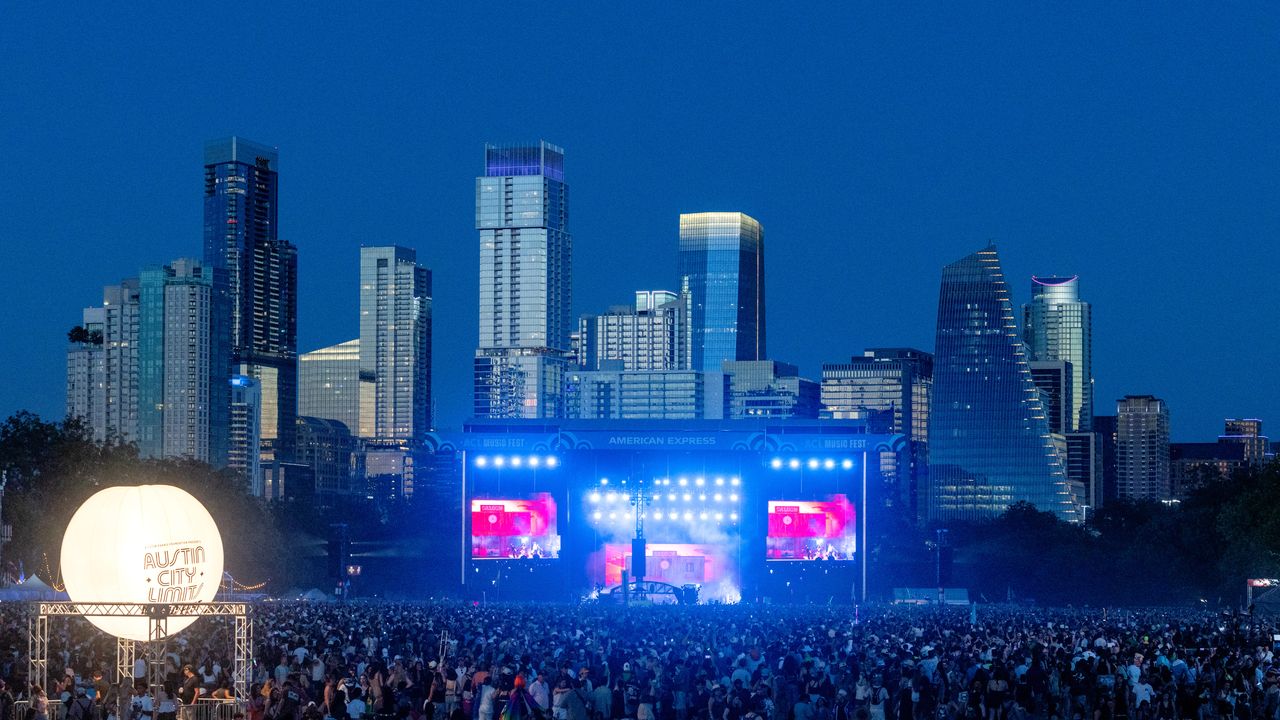
Charli xcx, Geese, the xx, Lorde, Skrillex,, the War on Drugs, and Turnstile are among the acts hitting the stage this weekend
Rules, Maverick Sabre – Stay Now Curated by Get the sound. Rules Instagram: https://www.instagram.com/thisisrules Spotify: https://open.spotify.com/intl-fr/artist/3CYrfsHEf7AZRlKUvzTnpA Apple Music: https://music.apple.com/us/artist/rules/1571097340 Maverick Sabre Instagram: https://www.instagram.com/mavericksabre Spotify: https://open.spotify.com/intl-fr/artist/0ukgrNYk51TkMQr0f2Br4Q Apple Music: https://music.apple.com/us/artist/maverick-sabre/350383613 Get the sound https://getthesound.komi.io/ https://www.instagram.com/getthesound/ Get the sound is an independent electronic music label and curator based in Paris. We discover, curate and release house music while creating visual experiences in unexpected locations. Subscribe for weekly mixes, live sessions, visualizers and exclusive releases. ©get the sound

Actor Andrew Garfield has stepped into one of dance music’s oldest debates, and the DJ community has plenty to say about it. Appearing on Kareem Rahma’s online series Subway Takes, the actor declared: “You can’t legitimately call yourself a DJ unless you use physical records.” Garfield explained that his view came from a recent trip …
Andrew Garfield says you’re not a real DJ unless you play vinyl, and DJs are not having it
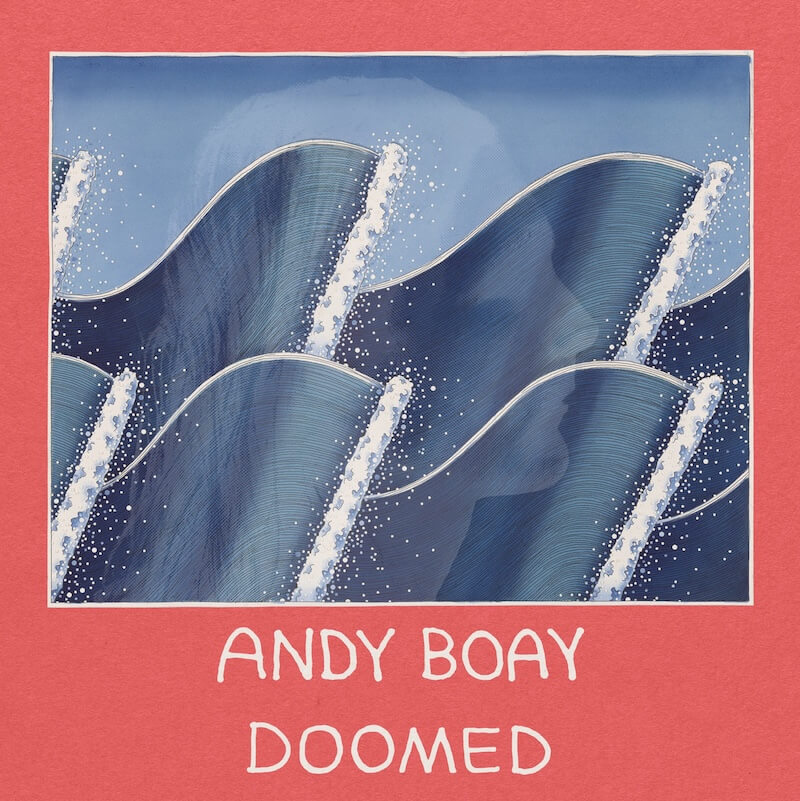
Andy Boay returns with an opus crafted with ecstatic care: a journey of reverbed vocals and guitar noodles, a lo-fi love letter, a bedroom SMiLE, and its own thing completely: Doomed. Doomed shares the same creative DNA as its brilliant predecessor, 2025’s You Took That Walk For The Two Of Us: another painstakingly crafted cassette recording, with tape manipulation galore and self-harmonies aplenty.
The post Andy Boay :: Doomed first appeared on Aquarium Drunkard.