Fun Fact: Taylor Swift & Jack Antonoff were 5 and 11, respectively, when the first Toy Story film was released in 1995.
Will ‘Toy Story’ Join These Other Film Franchises That Won Multiple Best Original Song Oscars?


Seattles Premier Silent Disco Headset Rental Company
Fun Fact: Taylor Swift & Jack Antonoff were 5 and 11, respectively, when the first Toy Story film was released in 1995.
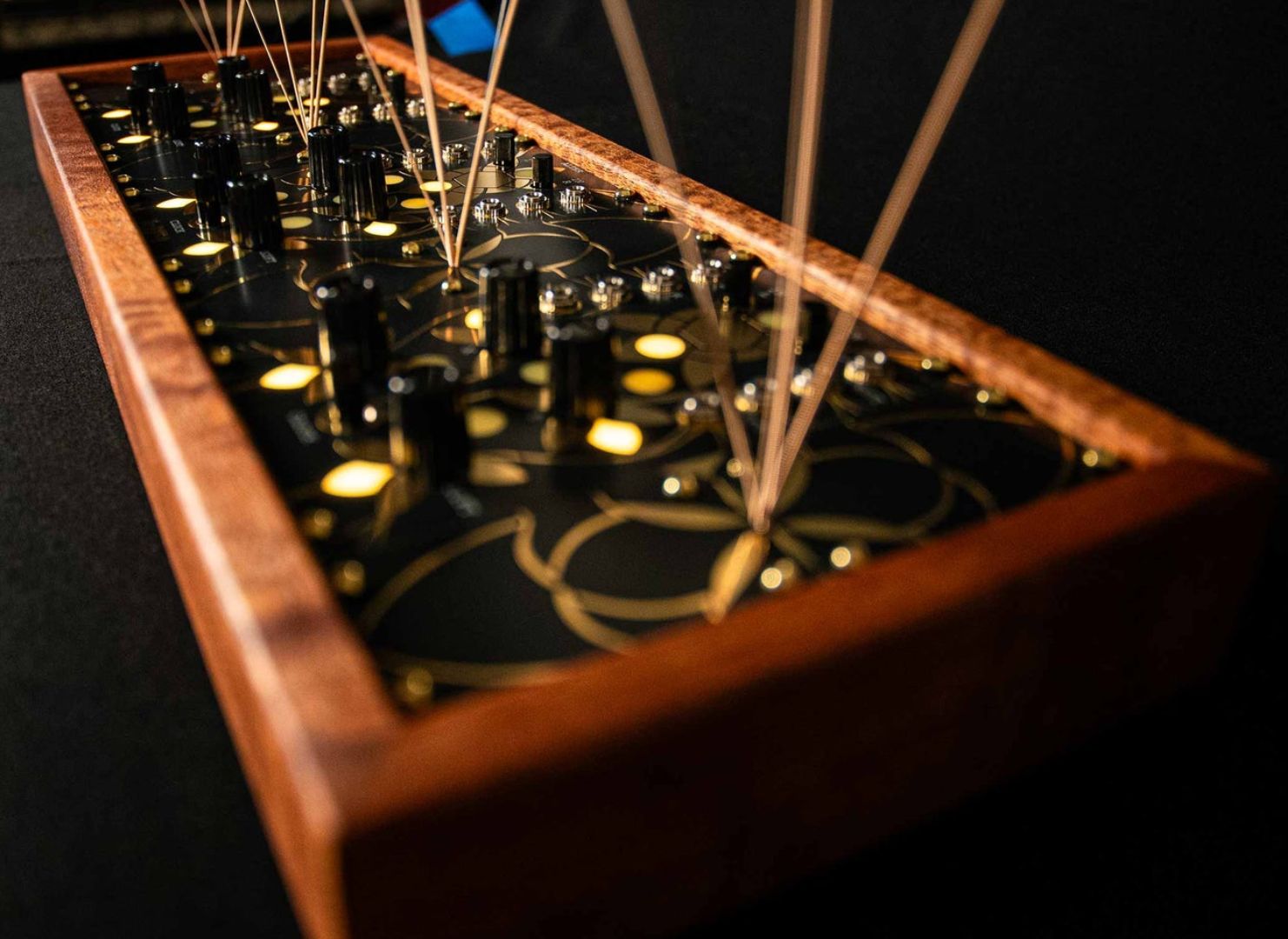
Electronic music producers have never had more tools available to them. Between powerful DAWs, affordable synthesizers, advanced plugins, AI-assisted workflows, and endless educational resources, building a modern music production setup has become easier than ever. Yet, as production becomes more accessible, it also becomes increasingly standardized. Beyond the world of mainstream synthesizers, MIDI controllers, and …
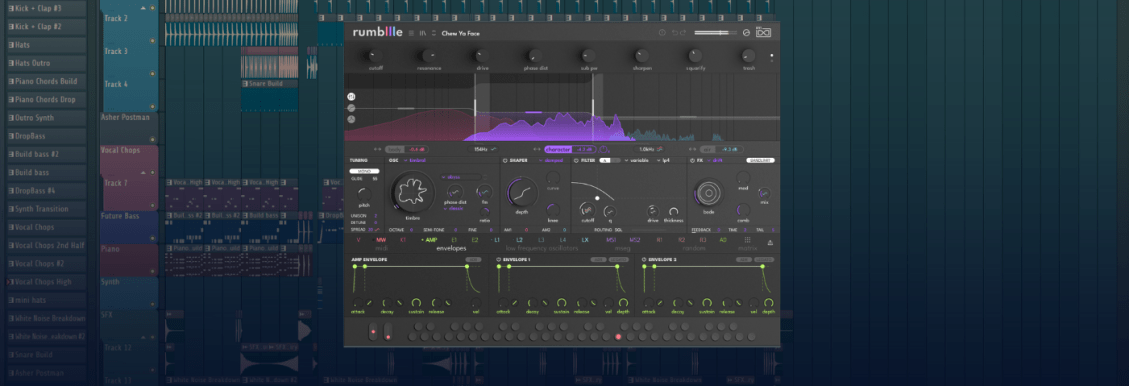

UVI suits up for the bass wars with Rumble, a low-end focused synthesizer that ingeniously splits every sound into three component bands. Is this enough to compete with established instruments like Massive?
UVI is known for a lot of things, chiefly sophisticated instruments like Falcon and incredible sound quality. Cutting-edge electronic music production tools, however, are not really something we associate with the French developer. That’s all about to change, as Rumble, the company’s latest instrument, is a bass-forward synthesizer that aims to take on the big-name players in the low-end game like Native Instruments’ Massive and Kilohearts’ Phase Plant.
Rumble has the sound quality, as you would expect. But it also brings something utterly unique to the (wave)table – and once you try it, you may not be able to live without it.
Rumble Overview 
Rumble’s big selling point is its three-band architecture. In much the same way that a kick designer separates percussion construction into three levels (sub, body, and transient), Rumble does a similar thing with bass building. It’s got three identical synthesizers, each with oscillator and distortion sections, a unified filter, and separate effects that pass through a multiband compressor with adjustable crossovers. This multiband stage allows you to design separate sounds in what UVI is calling Body, Character, and Air stages. It’s ingenious, and makes you wonder why it’s not standard on bass synths (you can bet it will be now, though!).
Each of the three synth engines is identical, so let’s look at what’s on offer.
First up is the oscillator section. This contains nine models, including virtual analog, wavetable, FM, sample-based, and other bass-focused engines. There’s even a kick generator for 808s and techno rumbles. With a name like Rumble, there had better be!
The oscillator then moves through a wave-shaper. As with the oscillator, this also presents a variety of different types. There are 10 distortion algorithms, to be exact, including clipper, sine, two foldback styles, noise, and more. Each also allows you to route amplitude modulation between the bands for extra crispiness.
You also get a per-band effects slot, with 10 types on hand that run the gamut from reverbs and delays to cabinet distortion, chorus, and more esoteric circuits like Neuro, which combines chorus, phaser and drive into a single spectral transformer. And, in keeping with the low-end theory of the instrument, these are all tuned for bass work.

Parked between the oscillator and effects stages is a global filter for processing all three bands into a single, cohesive whole. There are actually two filters here, with single, serial and parallel routings. The filter types themselves are a nice mix of traditional and modern, with Analog and Variable (the latter poached from the Oberheim XPander) sitting alongside Ripple, Swirl, Scream and Formant models.
As you’d expect from a modern bass designer, Rumble provides plenty of modulation possibilities. Using the now-standard Massive-style drag and drop system, it gives you ADSR envelopes, LFOs, MSEGs (Multi Segment Envelope Generators), random sources, and even analog drift for a dose of instability.
Lastly, the Master Section brings everything together with that multiband compressor. The compressor itself features eight different styles of dynamics control, from FET to OTT. You can also turn the compressor off and just use the bands as volume control. The crossover points are, naturally, adjustable. They’re also modulatable, which opens up all sorts of sound design possibilities. Each band can be independently panned, isolated, or even removed from the signal path. The Master Section also includes a four-band parametric equalizer and an on/off limiter at the output stage.
Lastly, there are 16 macros spread across the top for combining modulations and parameters.
[quote align=right text=”Rumble’s three-band architecture is ingenious, and makes you wonder why it’s not standard on bass synths”]
Rumble In Use: Sound Design 
All of these features come together to create bass sounds that are powerful, punchy and full of motion if you want it. Let’s hear Rumble in action.
Here’s a vintage-style synthesizer bass sound with juicy filter resonance. Let’s split it into its three components so we can hear them all separately.
First, the sub, or what UVI calls Body:
Next is the midrange Character:
The Air:
And now altogether:
Rumble can do all manner of modern bass sounds, including Reeses. This Reese uses the Analog oscillator for the Body and Air, and Timbral wavetable oscillator for the Character band.
Reese power:
Rumble can also drone. This bass drone features wavetables in all three oscillators.
Droning Rumble:
The Low Down: In Conclusion 
There’s a lot to like in Rumble. It’s very easy to whip up powerful and punchy bass sounds, and the three-band layout ensures that any sound will be well-represented across the frequency spectrum. And, as you’d expect from UVI, the sound quality is impeccable.
Rumble is also incredibly intuitive. Everything is where you expect it to be, and assigning modulation is as easy as dragging and dropping. And, if things get too complex, the modulation matrix page makes a handy visual guide.
This is an amazing start but there is more that we’d like to see. Modern bass sounds need to be both mono-safe and ultra-wide, and Rumble could offer more in the way of imaging options. Right now, you can choose monophonic, polyphonic or unison for each layer, and by playing with unison spread in the Character or Air bands you can get some cinematic sounds but proper non-unison stereo spread and mid/side options would be nice to see, as would a mono option, at least for the sub Body band.
The compressor could also be more robust. As it stands, there’s no attack, release or threshold, just gain amount. Or, let us route the bands out of the synth so we can process each one individually in our DAWs rather than just through the main stereo out.
We’d also love to see more presets that show off Rumble as a lead instrument. Most synths famous for their bass also make excellent lead machines. The Moog Minimoog and Roland SH-101 come to mind. A lead-focused preset category wouldn’t go amiss.
Lastly, there’s a feature where, when you turn a knob, your cursor disappears. This is probably to make adjustments easier to see. The problem is, sometimes the cursor doesn’t come back. You have to move the mouse off the plugin for it to reappear. Hopefully, this is just a bug and will be fixed in a future update. Better yet, make the disappearing cursor feature optional altogether.
These are small issues, though. Rumble is a fantastic instrument for bass music and other bassline-focused genres. At the introductory price of $99, it’s a no-brainer even if you don’t make jungle, dubstep or UK garage. Given its limitations, however, the cost will be harder to justify when it goes up to its regular price of $199. Massive and Phase Plant command similar prices when not on sale but they’re also much more versatile instruments.
Rumble’s three-band architecture and sound quality make it very attractive indeed for bass music producers. If it can eventually offer a little more, it could become attractive for a wider group of music makers, too.
[rating buy=”UVI Rumble” price=”$199 ($99 intro sale)” link=”https://www.uvi.net/rumble” value=”4″ versatility=”4.5″ sound=”5″ ease_of_use=”5″ overall=”4.5″ text=”A no-brainer for bass music producers.”] [product-collection]

The singer held up a sign in the audience asking for a hug from singer Gwen Stefani just one day after releasing her third album, You Seem Pretty Sad for a Girl So in Love.

ABOUT THIS PLAYLIST Ultimate 80s hard rock anthems and early 90s classics featuring Bon Jovi, Guns N’ Roses, Def Leppard, Van Halen, Mötley Crüe and more. Packed with hair metal, power ballads, and epic guitar solos from the golden era of rock. Add your playlist to Soundplate Grow your playlist while checking […]
The post 80s 90s Hard Rock Anthems / Classics / Hits : Spotify Playlist [Submit Music Here] appeared first on Soundplate.com – Record Label & Music Platform.

Silenoz gets into why his working relationship with Dimmu Borgir’s Shagrath has thrived through the years.

We’re far from the only ones who feel this way, okay?!
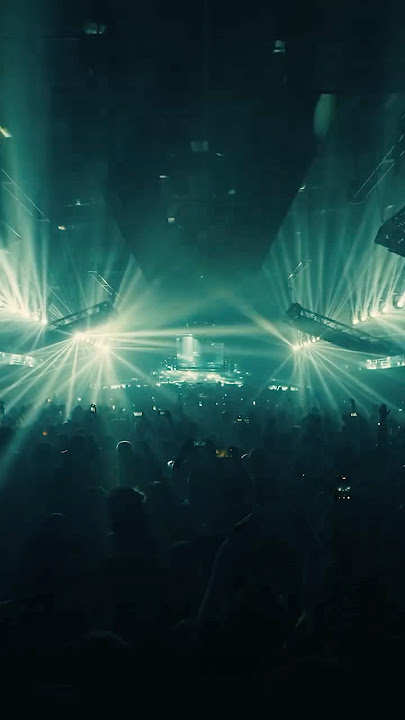

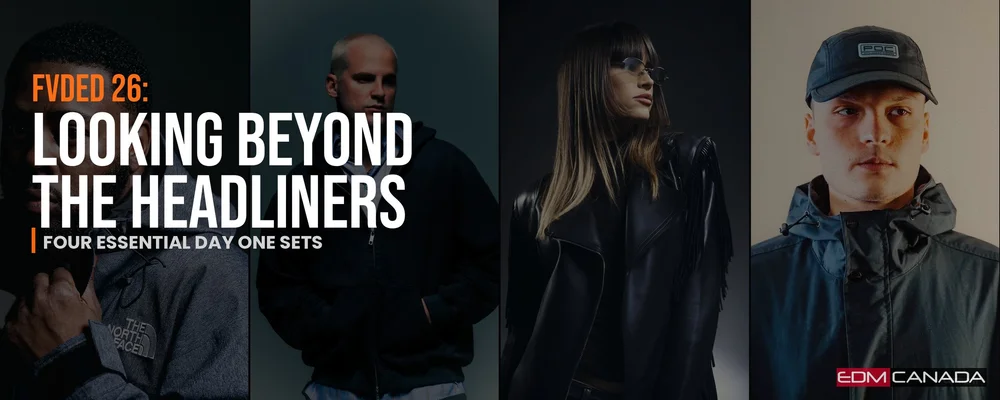
Some festivals are built around the names at the top of the poster. FVDED has increasingly become something else entirely —a place where discovery and nostalgia coexist, where familiar favourites share space with artists on the verge of defining the next era of dance music. 2026 marks the beginning of FVDED’s confident new era, and there is no looking back.
As the festival returns to Holland Park for another summer, one thing feels certain: Blueprint continues to lean into curiosity. Beyond the marquee names lies a deep roster of artists shaping the current moment in dance music and hinting at where the culture is headed next. Unapologetically tuned to movement FVDED rewards those willing to arrive early, wander between stages, and trust the process.
Without further ado, these are the four artists we think deserve a spot on your day 1 schedule.

Champion
Champion
Having spent years at the forefront of the UK’s underground dance scene, building a reputation around his unmistakable low-end basslines and rhythmic patterns, Champion easily lands at the top of our Day 1 recommendations. Moving effortlessly between House, UK-inspired Bass-Funk, and Grime influences, his productions are equal parts peak-energy weapons and a modern masterclass in communal groove. Champion’s true distinguishing factor is his ability to push UK club music forward while remaining firmly rooted in the underground. Expect heavyweight bass, infectious rhythms, and a dancefloor that rarely stands still. Put Champion at the top of your Day 1 list.
Breakout Release: Lighter
On Repeat: Talk To Me
Champion · Champion, Four Tet, Skrillex & Naisha – Talk To Me
In his own words—why this set’s one you won’t want to miss:
“Will be my first time ever in Vancouver & I’m so excited!
I’m coming with loads of new dubs for the set plus my collabs with
Sammy Virji, Interplanetary Criminal, Skrillex, Four Tet & more.
Expect high energy & loads of vibes!”
— Champion
Devault
DEVAULT
Right from the beginning DEVAULT has followed his own unique path. Looking back nearly a decade, many early fans first discovered him through his acclaimed remix of DJ Snake’s “A Different Way.” The remix plays as more of a reimagining shifting the emotional core of the original separating DEVAULT from the pack and highlighting his restraint as a producer to not simply chase drops. Since then, he has spent years refining his sound. Blending cinematic emotionally charged atmospheres, nostalgic synth work, and melodies with club-ready energy, DEVAULT’s set is required at viewing.
Breakout Release: A Different Way (DEVAULT Remix)
DJ SNAKE · A Different Way (DEVAULT Remix) [feat. Lauv]
On Repeat: Feels Like Us
Experts Only · Devault – Feels Like Us [Extended Mix]
In his own words—why this set’s one you won’t want to miss:
“My live set is where I get to bring my entire world to life. With a ton of new music on the way, this show will be one of the first chances to experience what’s next, alongside the records that got us here. If you’re looking to discover something new and be part of a moment before everyone else catches on, don’t miss it.”
— Devault
mph
MPH
Few UKG artists have generated as much momentum on the global stage as MPH. His sound effortlessly blends smooth grooves with high-energy bassline influences, resulting in tracks that are as infectious as they are energetic. Following sold-out tours across multiple continents and releases on many of the scene’s most influential labels, MPH has firmly established himself as one of the scene’s most promising exports. If you want a glimpse of the mainstream future of UKG, MPH is one of the strongest bets on the entire lineup. The melodies are catchy, the grooves are undeniable, and his set should resonate with far more than just the UKG faithful.
Breakout Release: Control
On Repeat: Flex It
Layla Benitez
Layla Benitez
Layla Benitez’s rise has been rapid, but she has been immersed in dance music her entire life. She possesses an unusually refined—almost classical—understanding of house music and what makes a dancefloor move. As her sets unfold, she builds atmosphere and maintains tension, forming an unspoken bond between the audience and her vision. Her sound is an amalgamation of indie dance, and melodic techno, combining 80s-inspired synth work, soulful basslines, and brooding undertones. The result is uniquely Layla. If you’re looking to lose yourself in a journey rather than a drop, Layla Benitez is essential viewing.
Breakout Release: Fides
Layla Benitez · Fides [Crosstown Rebels]
On Repeat: Broken Love
When We Dip · Premiere: Layla Benitez – Broken Love ft. Frýnn [Zamna Records]
In her own words—why this set’s one you won’t want to miss:
“This is my first time playing FVDED in the Park, so I’m really excited to bring my sound to Vancouver. It feels especially meaningful to do it in Canada since my mom is Canadian.
My sets are a reflection of where I’m at right now as an artist: melodic, emotional, a little darker, but still built for big dancefloor and festival moments.
More than anything, I’m excited to connect with the crowd and make the set feel like something people will really remember.
”
— Layla Benitez
FVDED 2026 is about more than just checking headliners off a list. It’s about discovery, connection, and the moments you never saw coming. This year, give yourself permission to wander. Catch the artist whose name you’ve never heard, follow the crowd toward a stage you weren’t planning to visit, and trust your curiosity. The future of dance music isn’t found in a single set—it reveals itself across an entire weekend of unexpected moments. Whether you’re there for the music, the community, or the collective escape that only festivals can provide, FVDED 2026 is an opportunity to experience something new. Your weekend, built one set at a time.
For more info on FVDED 2026 – including tickets – click here!

Mother has many valuable qualities and one of the them is the ability to bounce back from reverses. In the UK it may have lost Ikea to VCCP (a bit of head scratching here although VCCP and Mother have been playing pass the parcel with our Agency of the Year selection for the past few …
The post Mother wins brief to humanise QuickBooks first appeared on More About Advertising.